

The Dental & Oral and Maxillofacial service covers routine dental care as well as specialised treatment involving the mouth, jaws and facial region, including root canal treatment, extractions, implants, dentures, braces/aligners, jaw fractures, facial injuries, jaw-joint disorders, restricted mouth opening and Oral & Maxillofacial surgical procedures.
Tooth Pain, Cavities & Dental Treatment
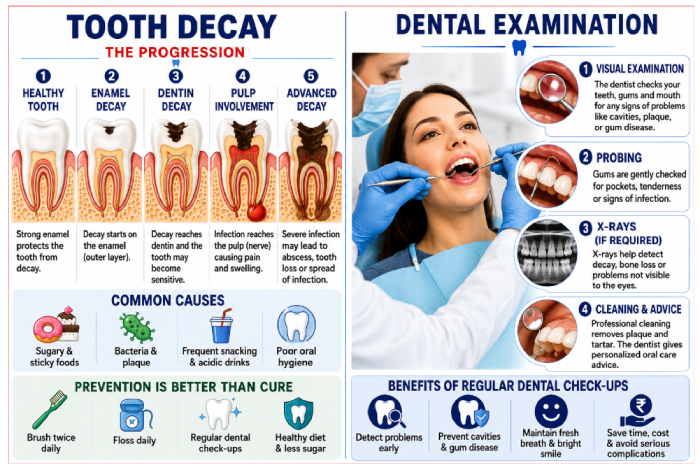
Does tooth pain always mean I need a root canal?
No. Tooth pain can have several causes. Examination is required to determine the appropriate treatment.
Can a cavity be treated without removing the tooth?
Many cavities can be treated with fillings or other restorative procedures when the tooth can be preserved.
Root Canal Treatment
Common symptoms
Possible treatment
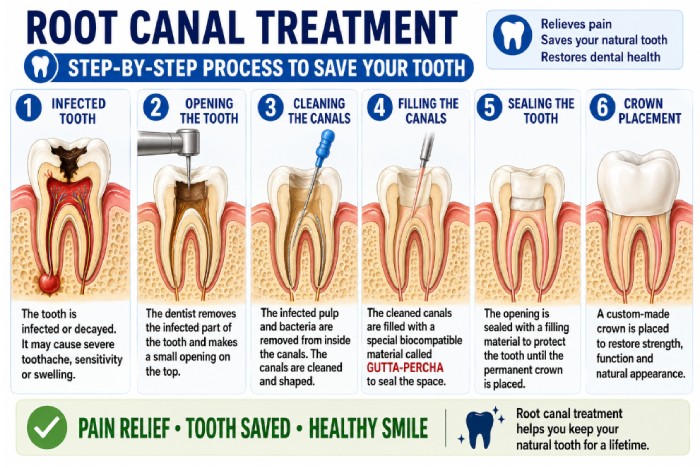
Why is root canal treatment needed?
It is used to treat selected teeth where the tissue inside the tooth has become infected or damaged.
Is root canal treatment painful?
Modern dental anaesthesia is used to control discomfort during treatment. Some temporary sensitivity may occur afterwards.
Why may the tooth need a crown or other restoration afterwards?
A tooth that has undergone root canal treatment may require appropriate restoration to protect it and restore function.
How many visits are required?
This varies depending on the tooth, infection and individual treatment plan.
Missing Teeth & Dental Implants
Common symptoms
Possible treatment
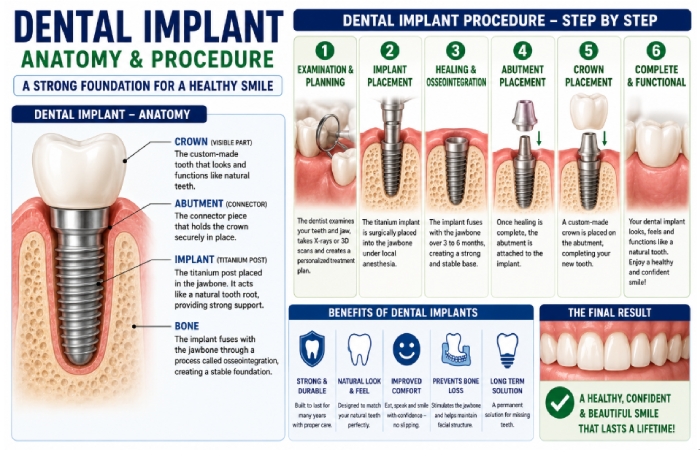
What is a dental implant?
A dental implant is a prosthetic replacement for the root of a missing tooth and can support an appropriate dental restoration.
Is everyone suitable for an implant?
Suitability depends on oral health, bone condition, general health and individual treatment requirements.
How long does implant treatment take?
The treatment timeline varies according to the patient's condition and the type of restoration required.
Dentures & Prosthetic Rehabilitation
Common symptoms
Possible treatment
What is the difference between complete and partial dentures?
Complete dentures replace all teeth in an arch, while partial dentures replace selected missing teeth.
Braces & Clear Aligners
Common symptoms
Possible treatment
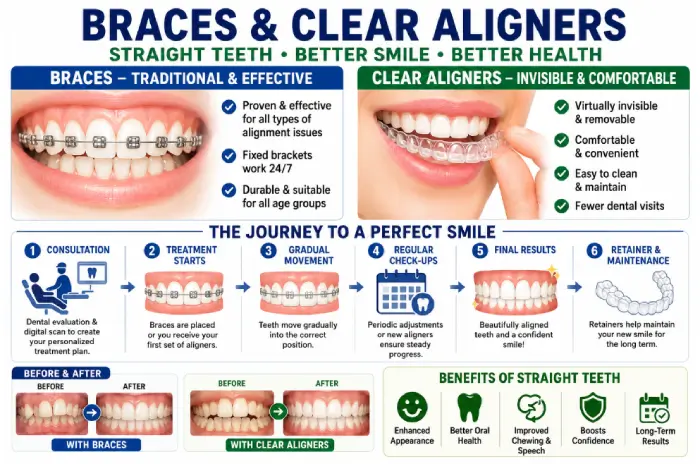
Why might orthodontic treatment be recommended?
It can help improve tooth alignment and bite and may improve oral function and ease of maintaining oral hygiene.
Are clear aligners suitable for everyone?
No. Suitability depends on the type and complexity of the dental problem.
Jaw Fractures & Facial Injuries
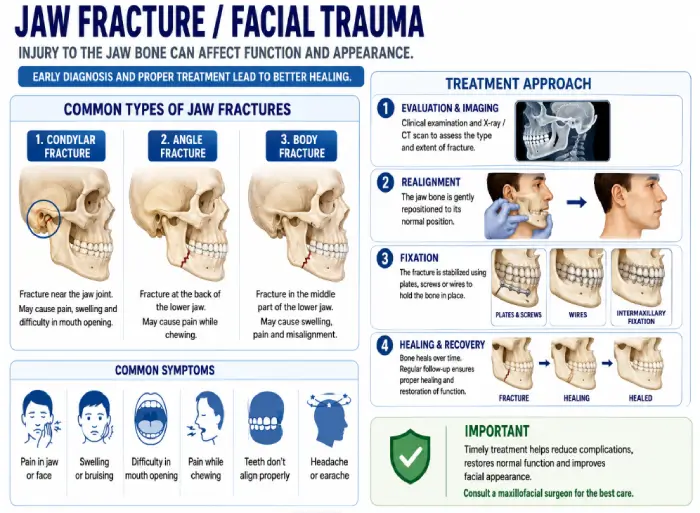
Common symptoms
Possible treatment
Why is a change in bite important after facial trauma?
It can indicate an injury involving the jaw and should be assessed by an appropriate specialist.
Do all jaw fractures require surgery?
Treatment depends on the location, severity and stability of the fracture and the patient's clinical condition.
Jaw Joint (TMJ) Problems
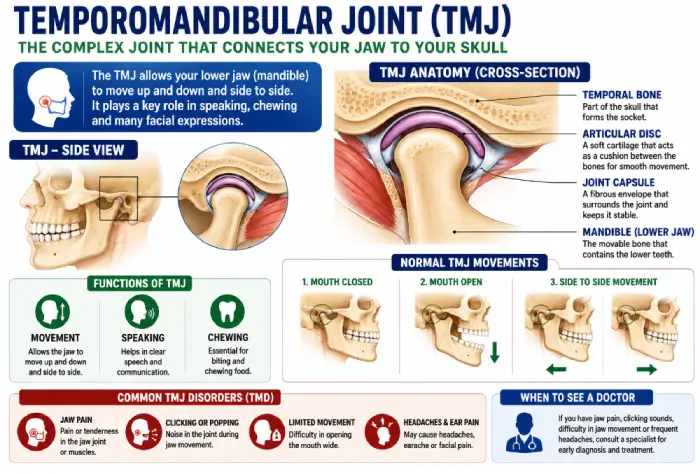
Common symptoms
Possible treatment
What is the TMJ?
The temporomandibular joint connects the jaw to the skull and allows movements required for chewing and speaking.
Does clicking always mean serious joint disease?
Not necessarily. Persistent pain, locking or restricted movement should, however, be assessed.