

Pro Health provides 24×7 Emergency & Trauma Care with prompt medical attention for fractures, orthopaedic injuries, accident-related conditions and other appropriate trauma cases. A stretcher-accessible lift facilitates safe movement to the first-floor hospital, while specialist care, necessary investigations and further treatment are coordinated according to the patient’s clinical needs.
Fractures & Broken Bones
Common symptoms
Possible treatment
How can I know if an injury may be a fracture?
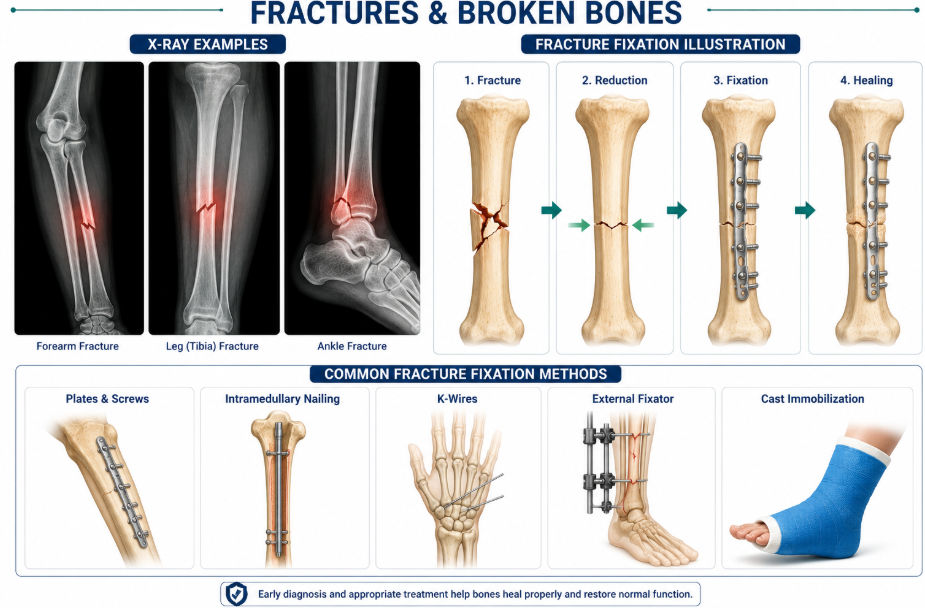
Pain, swelling, deformity, difficulty moving the affected area or inability to bear weight may suggest a fracture. Examination and appropriate imaging are required for diagnosis.
How can I know if an injury may be a fracture?
Pain, swelling, deformity, difficulty moving the affected area or inability to bear weight may suggest a fracture. Examination and appropriate imaging are required for diagnosis.
How can I know if an injury may be a fracture?
Pain, swelling, deformity, difficulty moving the affected area or inability to bear weight may suggest a fracture. Examination and appropriate imaging are required for diagnosis.
Joint Dislocations
Common symptoms
Possible treatment
What is a dislocation?
A dislocation occurs when the bones forming a joint are forced out of their normal position.
Does a dislocated joint need prompt attention?
Yes. Assessment is important to restore alignment and check for associated bone, ligament, nerve or blood-vessel injury.
Wounds & Soft-Tissue Injuries
Common symptoms
Possible treatment
When does a wound need medical attention?
Deep wounds, persistent bleeding, contaminated wounds, or wounds associated with loss of movement or sensation should be medically assessed.
Will every wound require stitches?
No. The need for suturing depends on the depth, location, age and nature of the wound.
Sports & Acute Musculoskeletal Injuries
Common symptoms
Possible treatment
Do all sports injuries require surgery?
No. Many injuries can be managed with rehabilitation, physiotherapy and gradual return to activity.
When may surgery be required?
Selected ligament, meniscus, tendon or other structural injuries may require surgery depending on the injury and activity requirements.